






Passivhaus for affordable housing
For many, occupying a building that meets the Passivhaus standard has been associated with elements of privilege. It is conceived that an individual’s wealth, or alternatively their depth of environmental knowledge determines whether the Passivhaus standard is accessible to them. Although this is far from being negative (as the more people engaging in energy efficient design, the better!), it has the potential to leave behind people who would benefit the most. People on low incomes often suffer the most when it comes to inefficient homes. Social housing or affordable houses, has in the past been prone to lower quality design and specification, causing them to be energy inefficient and thus expensive to run.
When designing affordable homes, build cost dominates the agenda. With this short-sighted, fragmented aim, we are missing the point of what it truly means to be ‘affordable’. Affordable housing is designed for low-income occupants. Therefore, it should npt just be efficient to build, it needs to be efficient to run. Passivhaus can help to achieve this.
It is almost like the Passivhaus standard was designed for development structures like medium density affordable housing, the type of which our cities are in desperate need. The core Passivhaus principles rest on designing homes that use as little operational energy as possible by achieving thermal comfort to the greatest practical extent through the use of passive measures.
While Passivhaus requires extensive design detailing and exceptional workmanship, the inherent repeatability and scalability of affordable housing schemes makes Passivhaus ever more feasible. Moreover, with the cost of the key Passivhaus features such as efficient mechanical ventilation with heat recovery, building materials such as air barrier membranes and insulation, and Passivhaus windows, achieving Passivhaus is becoming more accessible to the affordable housing market.
So, why isn’t Passivhaus more popular in the affordable housing market?
Common defences include ‘Passivhaus is more expensive’, ‘the tenants won’t know how to operate it’, ‘the skills required to build to Passivhaus standard are not readily available’ and so on.
Recently, local authorities have disproved these myths and are showing that Passivhaus is affordable, easily operable by tenants and can be achieved using locally-available skilled trades.
Take Norwich City Council as an example. In 2016 they set out to build the largest Passivhaus development in the UK with 100% affordable units. As one of the first to pursue Passivhaus on this scale, Norwich sought to create a network of organisations who have the expertise to deliver stringent Passivhaus requirements. The council pulled together the ‘Fabric First Framework’, a list of specialist contractors who have the necessary expertise, skilled trades and commitment to carry out Passivhaus. The Fabric First Framework is a growing list that can be publicly accessed by other local authorities or housing associations wishing to pursue similar projects.
Sustainability is a holistic concept. The intimate tie between social and environmental sustainability highlights the need for durable, energy efficient homes that help to break long-term cycles of fuel poverty, particularly for those in greatest need. Driving forward the Passivhaus standard in affordable housing schemes will enable us to improve social and environmental aspects of sustainability in unison.
[edit] Find out more
[edit] Related articles on Designing Buildings Wiki
Featured articles
Check out some of the best features and news from Designing Buildings as well as key stories from around the web.

CIOB reacts to the announcement of Andy Burnham as Prime Minister.

Heritage and conservation science workforce survey - Have your say.
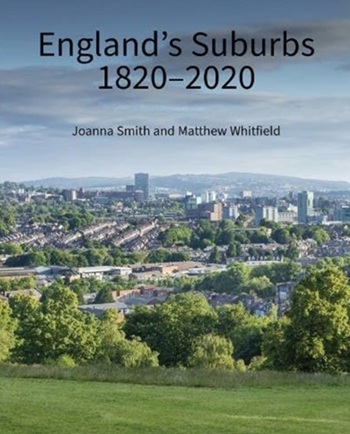
England's Suburbs 1820-2020. Book review.

New, more proportionate and targeted approach for higher-risk building assessments.
Government brings British Steel into public ownership.
UKCW Birmingham returns with bold new theme and focus.

New guidance published on competence requirements for self-certification schemes.
Construction Management, 8 July
NEETs crisis drives interest in trades, but apprenticeships barriers remain.
Passive fire protection webinar
MEP services penetration seals.

Where its at podcast (and video) - The role of the Architectural Technologist as an Expert Witness.
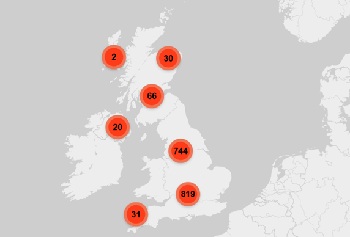
More than 200 remarkable buildings added to SAVE’s Buildings at Risk register.

Government scraps pre-application consultation for Nationally Significant Infrastructure Projects.